 KOKorean
 ENEnglish
 JP日本語
JP日本語 CN中文(简体)
 TW中文(繁體)

Breast Implant Revision in Seoul: Replace the Implant, or Remove It and Restore With Your Own Fat?
The right choice depends on why the problem began and on the condition of your tissue. The cause may lie with the implant or capsule (contracture, rupture or displacement), and you may want to keep implants. Then the cause is confirmed, the capsule is treated and a new implant is placed. If you no longer want implants, the implants and capsule are removed and, if you wish, some volume is restored with your own fat. Rupture or inflammation needs prompt care whatever the timing; otherwise revision usually waits until the tissue has settled after the previous surgery. If you are planning revision in Seoul, sending your previous surgery details and photos first helps us see which route may fit.
Why do people consider a second breast operation?
Breast implants are not lifetime devices. So even after a first operation that went well, many people eventually think about further surgery.
The US FDA is the agency that approves medicines and medical devices in the United States. In the long-term manufacturer data it reviewed, the most frequent reasons for removing implants were four: capsular contracture, rupture, malposition and wrinkling.2 Other reasons add to these:
- Dissatisfaction with size or shape
- Fluid or a lump that appears around the implant years later
- Whole-body symptoms without a clear cause
- Simply no longer wanting to have implants
The reason shapes the operation. "Something feels wrong with my breast" can mean a tightened capsule, a torn implant or a late fluid collection. Each calls for different tests first and a different scope of surgery.
Start from the problem
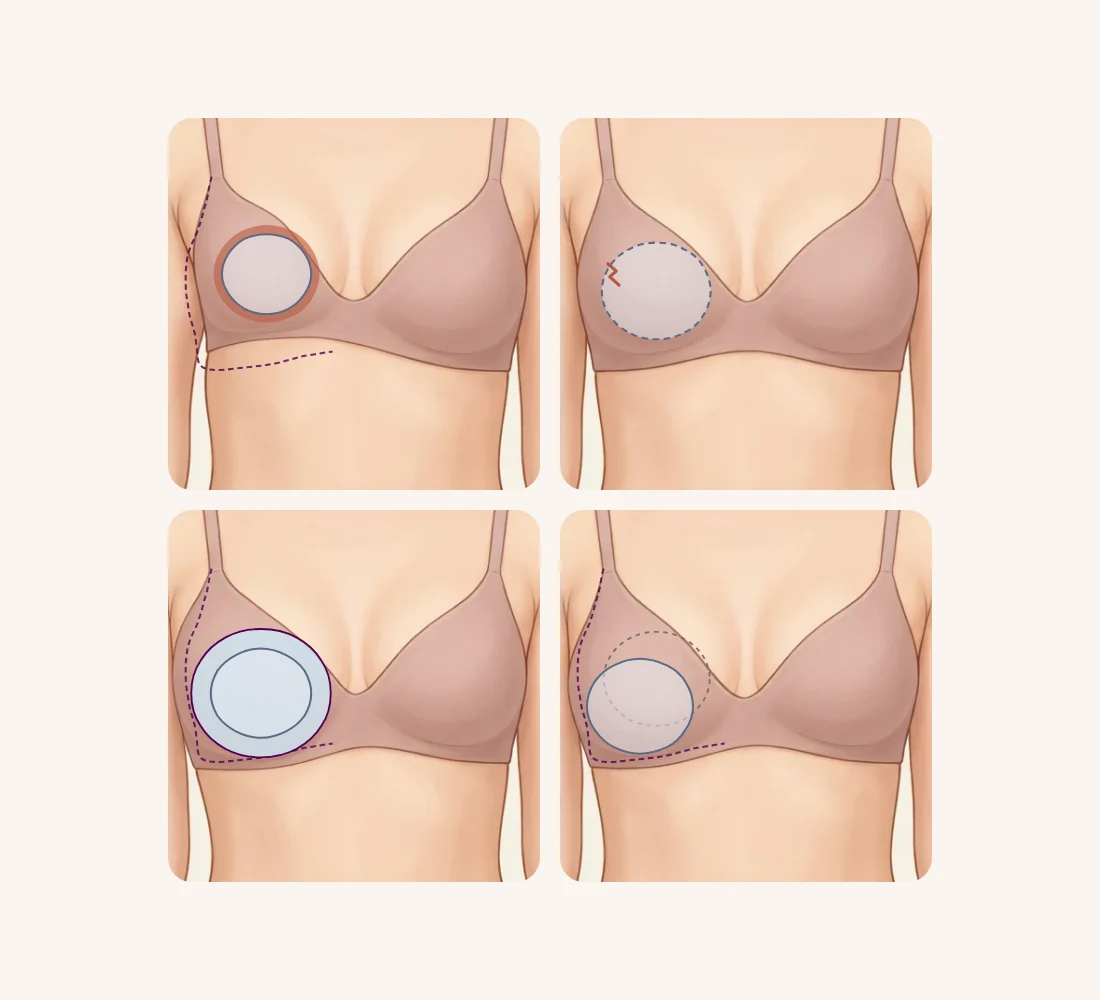
What to check first depends on what you notice. The figure below shows four common situations.
If this is the problem, check this first
1The breast is firm and changing shape
Examine the contracture grade (Baker) first
2It looks the same, but rupture is a worry
MRI finds silent rupture; ultrasound can screen
3Years later, one side swells with fluid
Ultrasound and testing of the fluid before surgery
4The implant sits low or drifts sideways
Check the implant position and the pocket
If joint pain, tiredness or other whole-body symptoms are the reason, other causes are looked for first. How much changes after removal differs from person to person.
Why is revision harder than a first operation?
A second operation works on tissue that has already been operated on. There is a capsule around the implant. A long-standing implant may also have stretched or thinned the skin and breast tissue. Breast tissue atrophy (tissue becoming thinner and smaller) and chest wall deformity are among the local complications the FDA lists.1
The numbers show the difference too. In one manufacturer's 10-year data reviewed by the FDA, implants were removed in 32.4% of revision augmentation patients compared with 20.8% after a first augmentation. Many complications were also more frequent after revision than after a first operation.2 For you as a patient, this means implants placed in a revision were removed more often, and had more complications, than first implants. So a revision plan should fix today's problem while lowering the chance of the next one.
Why revision is harder
What should you know about each problem?
Capsular contracture
The capsule around the implant thickens and tightens, so the breast becomes firm, painful or changes shape. Baker grades III and IV are considered severe and may require another operation. This usually means removing the implant, with or without replacing it. Contracture can come back after surgery.1
A systematic review (a study that gathers and summarizes many studies) of surgery for contracture is frank about the evidence. There were no controlled trials (studies that compare against another treatment group). Within what exists, moving the implant to a new pocket and replacing the implant were linked to less recurrence. But the benefit of removing the capsule itself (capsulectomy) was less clear.4 How much capsule to remove is decided by the grade of contracture and the state of the tissue.
Rupture
Rupture is a tear or hole in the implant shell. A saline implant deflates right away or over a few days. But most silicone gel ruptures cause no symptoms. These "silent ruptures" usually do not change how the breast looks or feels, so an exam alone often cannot detect them. MRI is the most effective test for silent rupture, and ultrasound is an acceptable screening test for people without symptoms.1
Gel that stays inside the capsule is an intracapsular rupture; gel that has moved beyond it is extracapsular. Gel that has travelled further can be difficult to remove completely.1
Rupture: where has the gel gone?
Late fluid or a lump
If, years after the incision has healed, one breast keeps swelling, a lump appears or the area around the implant hurts, BIA-ALCL must be ruled out. BIA-ALCL (breast implant-associated anaplastic large cell lymphoma) simply means "a lymphoma linked to breast implants".
A fluid collection around the implant is often found. The fluid and capsule tissue are tested to make the diagnosis: the cells are examined directly, and checked for markers called CD30 and ALK.3 BIA-ALCL is not breast cancer but a lymphoma of immune cells, usually found inside the capsule or in the fluid around the implant.3
Once diagnosed, the implant and the surrounding capsule must be removed together. This is a larger operation than taking out the implant alone.1 The FDA also notes rare reports of squamous cell carcinoma (a cancer arising from skin-type cells) and other lymphomas in the capsule.1
If one side swells years later
Whole-body symptoms
Some people with implants report tiredness, memory problems, rashes and joint pain, sometimes called breast implant illness (BII). The symptoms and their causes are poorly understood. Removing implants without replacing them has been reported to reverse symptoms in some cases, but not in all.1
If this is your reason for considering removal, it is worth looking for other causes first. Then talk through what removal can and cannot be expected to change before deciding.
What if you are worried about BIA-ALCL but have no symptoms?
In 2019 the FDA asked one manufacturer to voluntarily recall certain textured implants and tissue expanders linked to a higher BIA-ALCL risk. Tissue expanders are devices used in reconstruction to stretch the skin in advance. At the same time, it said it was not recommending routine removal of these or other implants in patients without symptoms.3 Instead, people with implants are asked to watch for lasting swelling, a lump or pain around the implant, and to see a doctor if these appear.3
So the starting point is finding out exactly which implants you have:
- Your operative note or implant card shows the type and surface.
- Keep up regular checks.
- If worry leads you to want removal, weigh the pros and cons of that choice at consultation.
Replace, or remove and fill?
Revision follows two broad routes. One is to deal with the cause and place a new implant. The other is to remove the implant and capsule and, if you wish, restore some volume with your own fat.
Replace, or remove and fill?
Three things decide which route fits: the cause of the problem, the thickness and condition of the remaining tissue, and whether you want to keep implants in the future.
What is causing the problem, and what do you want?
- Contracture, rupture or position; keep implantsConfirm the cause, treat the capsule, new implantSize and pocket redesigned
- No longer want implantsRemove implants and capsuleOptional fat grafting for some volume
- Late fluid or a lumpTest the fluid and tissue firstIf BIA-ALCL: implant and capsule out together
- Rupture, inflammation or other urgent issueTreat promptly, whatever the timingNext step once tissue settles
| Approach | Typically suited to | Good to know |
|---|---|---|
| Capsule treatment + new implant | Contracture, rupture or displacement; you want to keep your size | Pocket change and exchange linked to less recurrence; capsulectomy evidence less clear4 |
| Removal of implants and capsule only | You no longer want implants and accept a size change | Breasts become smaller and stretched skin can change their shape |
| Removal + your own fat | You want some volume back without implants and have fat to spare | Part of the fat is absorbed; cysts or infection can occur5 |
What should you know about removing implants and restoring with your own fat?
Removing an implant takes away the volume it occupied. Skin that had stretched around the implant can also make the breast look different. Fat grafting is one way to fill that space.
In a study of 80 women (160 breasts), fat was grafted at the same operation as implant removal. Between 300 and 600 mL of fat was placed into the skin and subcutaneous tissue of each breast. Over an average of two years, cysts (small pockets of fluid or oil) formed in 9 breasts (5.6%) and infection occurred in 2 (1.25%).5 The study judged size by bra cup rather than measuring the volume that remained.5
How much transferred fat survives varies widely: reported survival in the fat grafting literature ranges from 20% to 90%.6 Even with the same method, then, how much will stay cannot be promised in advance.
Adding stem cells
Adding stem cells derived from fat is being studied as a way to improve this. These are adipose-derived stromal cells, or the stromal vascular fraction, a mix of cells that includes stem cells. In a systematic review, six of seven clinical studies reported better results with this "cell-assisted" approach, but one found no difference, and that one was a breast augmentation study. The studies were of low quality, and the right number of cells and the long-term safety are not yet known.6
So rather than counting on stem cells for extra volume, it is realistic to plan with some absorption in mind and to review progress over time.
When can revision be done?
Rupture, inflammation and similar problems need prompt treatment regardless of timing. Otherwise, revision is usually done once the tissue has settled after the previous operation. If there is late fluid around an implant, testing comes before deciding on the operation.3
How we approach it at Bonita Clinic
At Bonita Clinic, we perform revision breast surgery without general anesthesia; you go home the same day, and stitches are used. How long recovery takes and how many follow-up visits you need vary with the scope of the operation and your own healing.
Revision options you can discuss in Seoul
Since Bonita Clinic opened in 1995, Dr. Kwang-Seop Chung, a board-certified plastic surgeon trained in Brazil, has been seeing patients himself at the same location. For breast implant revision, the options discussed in consultation are:
- Implant replacement: identifying the cause (contracture, rupture, displacement), treating the capsule and redesigning size and position
- Implant and capsule removal, with volume restored using your own fat and stem cells
- Small endoscopic incisions, without general anesthesia
Which of these suits you is decided only after reviewing your records and examining you.
Why do the plan and cost differ from person to person?
Two people asking for "breast revision" may need very different operations. What has to be done with the implant, the capsule and the tissue shapes the plan and the cost.
- Cause: contracture, rupture, position or size
- Replacement, or removal with or without fat
- How much capsule needs treatment
- Silicone that has spread outside the capsule
- Number of previous operations and tissue thickness
- Tests needed before surgery (imaging, fluid)
Final plan and quote after an in-person exam
A final estimate is given only after the in-person examination and a review of your imaging, once the scope of capsule work and any fat grafting is clear. Photos can point in a direction but cannot settle these questions.
What can photos show, and what needs an in-person exam?
Photos and records sent in advance help a great deal in revision. But some of the deciding factors can only be judged by examination and imaging.
Photos and records can show
- Shape, asymmetry and implant position
- Visible rippling or a high, round contour
- Scar location from earlier surgery
- Implant type and size from your records
Needs an in-person exam
- Firmness and contracture grade
- Rupture or gel outside the capsule (imaging)
- Fluid or lumps around the implant
- Skin and tissue thickness over the implant
- Fat available for grafting
Helpful materials: photos front-on, both sides at 45 degrees and side views, standing with arms relaxed; your operative notes or implant card; and recent ultrasound or MRI reports and images. A photo from before the change you are worried about is useful. Send us a message with these materials and your questions.
Planning your visit and recovery
What is confirmed in advance is limited to the treatment information above: surgery without general anesthesia, same-day discharge and stitches. How long to stay in Seoul, when stitches come out and when you can return to normal activity all vary. They depend on whether the implant is replaced or removed, how much capsule work is needed and whether fat is grafted. These are planned with you at consultation. If tests such as imaging or fluid analysis are needed first, they may change the order of your visit.
Bring your previous surgery records, implant card and imaging reports. After revision, keep the records of what was done, including any new implant's card. If you have new silicone gel implants, the FDA's screening schedule (first ultrasound or MRI 5 to 6 years after surgery, then every 2 to 3 years) starts again. Any doctor who sees you later will need this information. If swelling, redness, heat, pain or discharge increases instead of settling, contact a doctor promptly.
Real treatment cases
These cases appear on Bonita Clinic's revision breast surgery page. Results vary from person to person.
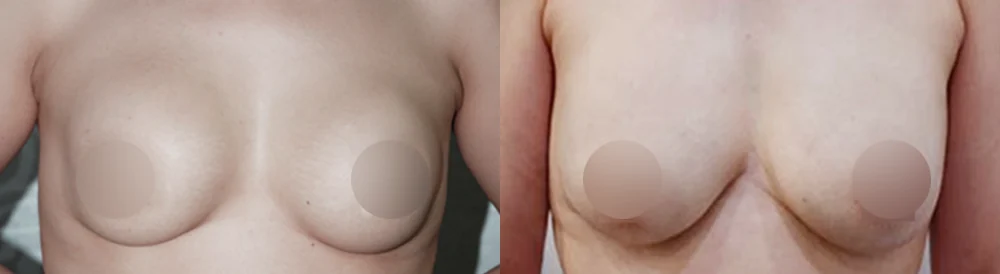
Both breasts sitting high and round before surgery (front view)
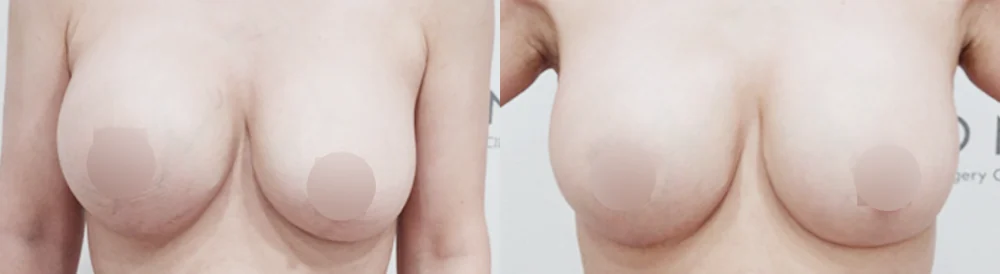
The two breasts differing in height and shape before surgery (front view)
* Results vary from person to person. Side effects are possible, so please decide after a thorough consultation with a doctor.
Frequently asked questions
When can revision surgery be done?
Usually after the tissue has settled from the previous operation. Problems such as rupture or inflammation, however, need prompt care regardless of timing. If one breast has swollen with fluid years later, testing comes before deciding on the operation.
Does the whole capsule have to be removed?
It depends. If BIA-ALCL is diagnosed, the implant and capsule must be removed together.1 In revision for contracture, the evidence for capsulectomy is less clear than for changing the pocket or replacing the implant.4 So how much capsule to treat is decided by the grade of contracture and the condition of the capsule and tissue.
Will my breasts sag or shrink after implant removal?
They will lose the volume the implant occupied, and stretched skin can change their shape. That is why removal alone and removal with fat grafting are compared from the start. Because part of the fat is absorbed, aiming for natural volume rather than matching the old implant size exactly is more realistic.
I have textured implants and no symptoms. Should they come out?
The FDA does not recommend routine removal of implants in people without symptoms.3 Confirm which implants you have, continue regular checks, and see a doctor promptly if swelling, a lump or pain appears. If you want removal because of worry, the pros and cons are weighed together at consultation.
Does adding stem cells help more fat survive?
Many studies report better survival, but they are of low quality, and one breast augmentation study found no difference.6 Go in knowing that less may remain than hoped, and plan while watching your progress.
What to prepare before your consultation
- Previous surgery records: date, clinic, implant type (silicone gel or saline), size and surface, pocket position and incision site
- A photo or copy of your implant card, if you have one
- Recent ultrasound or MRI reports and images
- When the problem started and how it has changed: firmness, shape change, swelling, pain, warmth
- What you want: a new implant, or life without implants
Bonita Clinic is on the 3rd floor of 565 Gangnam-daero, Seocho-gu, Seoul, about 100 m on foot from Exit 8 of Nonhyeon Station (Line 7). You can read more on our Revision Breast Surgery page. If you are considering a first augmentation, see Safe Breast Augmentation and our guide to breast implants and fat grafting. For fillers or other material injected into the breasts, see Breast Surgery Revision and the guide to breast injection and foreign material removal.
References (6)
Sources that support the explanations in this article. Study findings describe general trends and do not guarantee individual results.
- U.S. Food and Drug Administration. Risks and Complications of Breast Implants. U.S. FDA. 2023;Content current as of 12/15/2023.FDA page: list of local complications (including breast tissue atrophy and chest wall deformity), grade III-IV contracture may require reoperation and can recur, intracapsular vs extracapsular and silent rupture, MRI as the most effective test and ultrasound acceptable for screening without symptoms, systemic symptoms and reported improvement after removal, reports of squamous cell carcinoma and other lymphomas in the capsule
- U.S. Food and Drug Administration, Center for Devices and Radiological Health. FDA Update on the Safety of Silicone Gel-Filled Breast Implants. U.S. FDA. 2011;June 2011.FDA safety review (2011): common reasons for implant removal (contracture, rupture, malposition, wrinkling); complication rates higher after revision than primary augmentation (e.g. 10-year removal 32.4% vs 20.8% in one manufacturer's data); routine replacement not needed but further surgery is common
- U.S. Food and Drug Administration. Questions and Answers about Breast Implant-Associated Anaplastic Large Cell Lymphoma (BIA-ALCL). U.S. FDA. 2019;Content current as of 10/23/2019.FDA Q&A on BIA-ALCL: a lymphoma, not breast cancer, usually found in the capsule and surrounding fluid; symptoms (persistent swelling, a mass, pain, fluid collection); testing of the fluid and capsule (cytology, CD30 and ALK); routine removal not recommended for patients without symptoms; the 2019 recall request for certain textured products
- Wan D, Rohrich RJ. Revisiting the Management of Capsular Contracture in Breast Augmentation: A Systematic Review. Plast Reconstr Surg. 2016;137(3):826-841.doi:10.1097/01.prs.0000480095.23356.aeSystematic review (abstract) of surgery for capsular contracture: limited evidence (24 studies, no controlled trials); pocket change and implant exchange associated with lower recurrence; evidence on capsulectomy less conclusive
- Abboud MH, Dibo SA. Immediate Large-Volume Grafting of Autologous Fat to the Breast Following Implant Removal. Aesthet Surg J. 2015;35(7):819-829.doi:10.1093/asj/sjv073Case series (abstract) of 80 patients (160 breasts) with fat grafting at the time of implant removal: 300-600 mL per breast into skin and subcutaneous tissue; over about 2 years, cysts in 5.6% and infection in 1.25% of breasts; size judged by bra cup rather than measured volume
- Toyserkani NM, Quaade ML, Sørensen JA. Cell-Assisted Lipotransfer: A Systematic Review of Its Efficacy. Aesthetic Plast Surg. 2016;40(2):309-318.doi:10.1007/s00266-016-0613-1Systematic review of fat grafting enriched with stem cells (cell-assisted lipotransfer): 6 of 7 clinical studies favored it but 1 breast augmentation study found no difference; low-quality studies, optimal cell dose and safety still unknown; survival of ordinary fat grafts reported between 20% and 90%
About this article
This article separates general medical information from Bonita Clinic's own approach. Because the right decision depends on each person's condition, it is not a substitute for a consultation.
