 KOKorean
 ENEnglish
 JP日本語
JP日本語 CN中文(简体)
 TW中文(繁體)

Multi-Lifting in Seoul: Combining Liposuction, Threads, Fat Grafting and Laser by the Cause of Sagging
Multi-lifting combines only the methods your sagging calls for, chosen from jawline liposuction, dissolvable threads, stem cell fat grafting and combined lasers. It does not mean having all four. Fat gathered below the jawline is reduced, rough skin texture is treated with threads and lasers, and hollow cheeks or forehead are filled with your own fat. Each method has limits in its evidence, and lasting results cannot be promised. When laxity reaches deep into the SMAS (the tough layer lifted in a facelift), methods without large incisions have limits, so a facelift is considered alongside. If you are planning treatment in Seoul, you can send photos first to see which combination might fit your face.
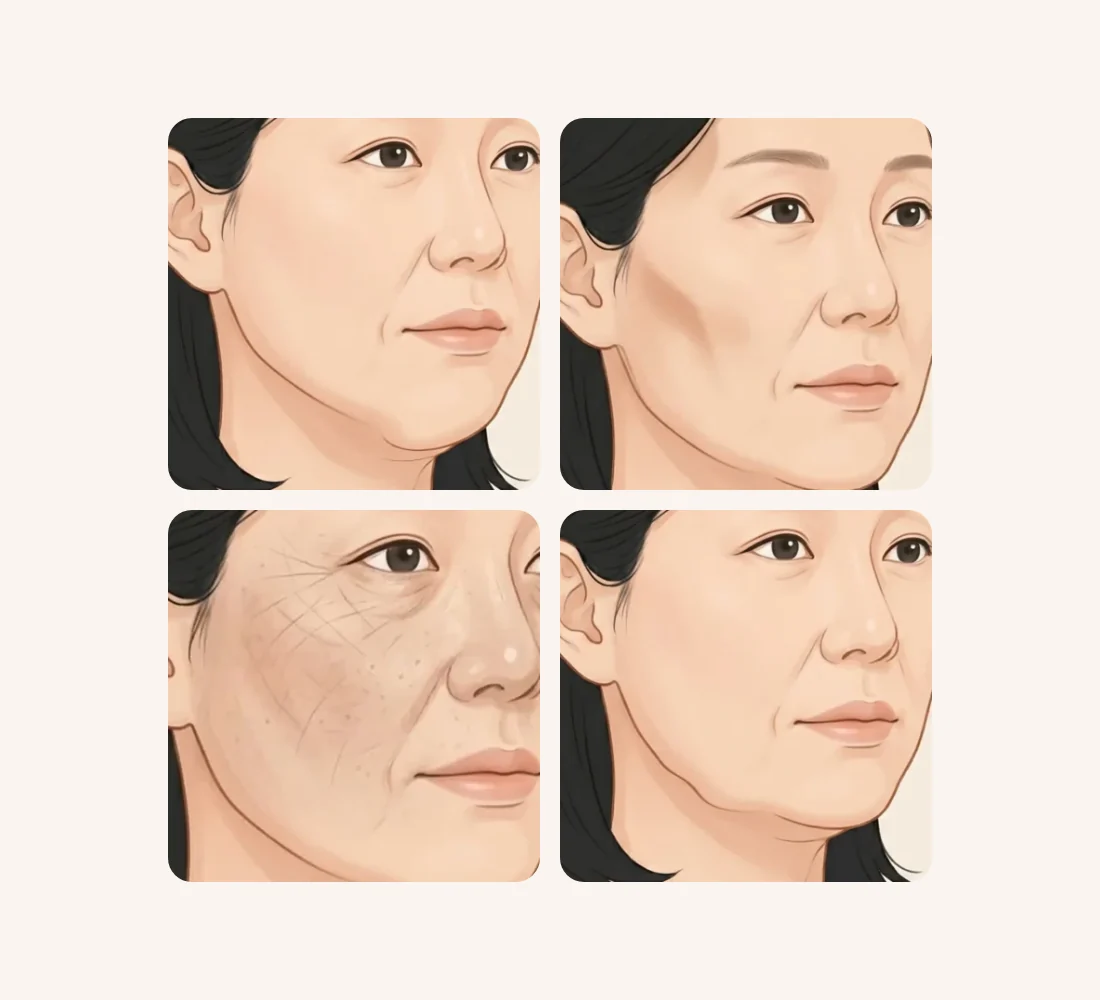
Why does a face look saggy?
A face is not one single layer. Fat, muscle and skin sit in several layers on top of the bone, and ligaments (tough, cord-like tissue that anchors soft tissue toward the bone) hold these layers in place. As we age, all of these layers change together, little by little.
- Bone: the facial bones recede slightly, so they support the soft tissue above them less.
- Fat: the deep fat inside the cheeks shrinks, while the shallow fat just under the skin slides downward. A review of facial aging names these two changes as the main driver of aging in the cheeks (the midface).1
- Ligaments: as the ligaments that hold tissue in place weaken, the jowls sag and the jawline blurs.1
- Skin: the skin thins, and elastin, the fiber that lets skin spring back, falls sharply from around the age of 40 to 50.1
Cheek cut top to bottom: the layers that change with age
So two people who both feel their face has "dropped" can have different causes. One person has fat gathered below the jawline. Another looks saggy because the cheeks and forehead have hollowed. A third has skin that has become thin and rough. In some people, the laxity reaches deep into the SMAS. The SMAS is a thin, tough layer under the fat that covers the facial muscles; it is the layer a surgeon lifts in a facelift.
Different causes call for different methods. If you repeat one treatment again and again, the problems in the layers it does not reach stay where they are.
Different causes call for different methods
1Fat has gathered below the jawline
A fine tube (cannula) reduces the fat under the skin
Jawline liposuction · reduce
2Cheeks or forehead look hollow
Your own fat, with cells separated from fat, fills the hollows
Stem cell fat grafting · fill
3Skin is rough with more fine lines
Dissolvable threads placed like a mesh, plus lasers for texture and tone
Threads · combined lasers
4Laxity reaches down to the SMAS
Methods without large incisions have limits, so a facelift is considered
Facelift
What does multi-lifting combine, and how?
Multi-lifting at Bonita Clinic is an alternative to a facelift with long incisions in front of the ears. From four methods, only those that match the cause of your sagging are chosen and done together. It does not mean having all four.
Each of the four methods has a different job: reduce (take away gathered fat), firm up (improve skin texture), fill (replace lost volume) and refine (smooth the skin surface).
Where each of the four methods works
| Method | For this cause | What it does | Good to know |
|---|---|---|---|
| Jawline liposuction (reduce) | Fat gathered below the jawline | A fine tube (cannula) reduces fat under the skin | Only reduces fat under the skin; problems in other layers can remain2 |
| Dissolvable threads (firm up) | Rough texture and fine lines | Placed densely like a mesh under the nasolabial, hollow-cheek and under-eye skin | Not the same as threads that pull tissue up; effects may fade4 |
| Stem cell fat grafting (fill) | Hollow cheeks and forehead | Cells separated from your own fat are injected together with fat | Not all grafted fat survives; evidence for the added cells is limited5 |
| Combined lasers (refine) | Texture and tone | Two or three lasers used together to suit your skin | Treat skin quality; not a lifting method6 |
What are the evidence and limits of each method?
Combining methods does not remove the limits of each one. Here they are one at a time.
Jawline liposuction: when fat is the cause
If fat has gathered under the skin beneath the chin and along the jawline, reducing that fat is the first step toward a clearer jawline.
But a sagging neck and under-chin area often involve problems in several structures, not only the fat under the skin. A review points out that, for this reason, liposuction and skin tightening alone are not enough for many patients.2
Complications of liposuction under the chin are rare. When they do occur, though, they can be significant. Reported problems include hollowing under the chin, swelling that lasts a long time, and thick scars or scars that shrink and pull. Others are temporary paralysis of a facial nerve that makes expressions look uneven, and a collection of blood under the skin (hematoma).3
Dissolvable threads: for texture and fine lines
The dissolvable threads used at Bonita Clinic are not threads that pull sagging tissue upward. They are placed densely like a mesh under the skin to help the skin form collagen, the protein that supports it.
A meta-analysis (a study that pools the results of many studies) looked at 26 studies of facial thread procedures. The most common problem was swelling (35%), followed by skin dimpling (10%) and numb or unusual sensation (6%). Then came threads that could be seen or felt (4%), infection (2%) and threads working their way out (2%).4 Dissolvable threads caused less altered sensation and extrusion than threads that do not dissolve, and people over 50 had more dimpling and infection.4
Satisfaction fell from 98% right after treatment to 88% in the longer term. That is, almost everyone was happy at first, but fewer people were satisfied as time passed. The authors therefore advise telling patients beforehand that the effect may not last.4
A meta-analysis of 26 facial thread studies
Stem cell fat grafting: when volume has been lost
If the cheeks and forehead look saggy because they have hollowed, reducing or tightening will not fix it. The lost volume needs to be replaced. Bonita Clinic takes fat from an area where it is not needed, separates fat-derived stem cells from it, and injects them together with fat.
Adding cells separated from fat in this way is called cell-assisted fat grafting. A meta-analysis of 15 studies (737 patients) compared it with conventional fat grafting in the face. The cell-assisted method showed higher fat survival (the share of grafted fat that settles in and stays alive) and higher satisfaction, with no difference in complications.5
Most of these studies, however, were small observational studies, which follow patients who were already treated rather than testing treatments in a planned trial. The authors called their conclusion tentative, and long-term results still need confirmation.5 Because not all grafted fat survives, follow-up visits to check how much of the graft has taken are part of the process.
Combined lasers: to refine skin quality
Lasers treat the quality of the skin itself: texture, fine lines, color and sun damage. There are three broad types. Non-ablative lasers leave the skin surface intact. Fractional lasers make tiny, closely spaced columns of injury. Ablative lasers remove a thin layer of the surface. They differ in effect, recovery and risk.6
In multi-lifting, lasers are not there to lift tissue. They refine the skin surface once the contour has been addressed by the other methods.
Multi-lifting or a facelift: which suits me?
Multi-lifting often suits early to moderate sagging where the cause lies in fat, volume or skin.
If the laxity reaches deep into the SMAS, or there are many neck lines and a lot of loose skin, methods without large incisions have limits. A facelift, which tightens from the SMAS up, is then considered. In between there is ultrasound lifting, which works on deeper skin layers with ultrasound and no incisions. Bonita Clinic uses it for mild sagging of the brows and under the chin. If your face has sagged again after earlier lifting, the condition of the remaining tissue is checked first.
Choosing by how deep the sagging goes
| Method | Layers treated | Typically suits | Incisions |
|---|---|---|---|
| Multi-lifting | Fat, volume, skin texture | Early to moderate sagging from fat or volume loss | No large incisions |
| Ultrasound lifting | Deeper skin to the SMAS | Mild sagging of brows and under the chin | None |
| Facelift | SMAS and loose skin | Deep sagging to the SMAS, neck lines | Around the ears and hairline |
How is it done, and what is recovery like?
At Bonita Clinic, we perform multi-lifting under sedation (medicine that makes you feel drowsy and relaxed) together with local anesthesia (numbing only the treated area). You go home the same day, and stitches are used if fat grafting is done. The process and recovery vary widely depending on which methods are combined, so the actual schedule differs from person to person.
| Stage | What is common | What the clinic does |
|---|---|---|
| Right after | Swelling and bruising in the treated areas | Compression or dressings, depending on the extent |
| During recovery | Swelling and bruising fade and the contour shows | A stitch-removal schedule if incisions were made |
| Settling | The tight feeling becomes more natural | How much graft has taken is checked if fat grafting was done |
With liposuction, the area where fat was removed can swell and bruise. With fat grafting, so can the area where fat was taken. Thread sites may look swollen or slightly dimpled for a while. If instead of settling they become redder and more painful, infection needs to be checked.4
How we approach it at Bonita Clinic
How multi-lifting proceeds
- 1Find the layerSkin, fat, volume or fascia?
- 2Jawline liposuctionWhen fat has collected below the jaw
- 3Dissolvable threadsWhen texture is rough with fine lines
- 4Stem cell fat graftingWhen forehead or cheeks have hollowed
- 5Combined lasersTo refine tone and texture
Steps 2–5 are not all done; only those matching the cause are chosen
Multi-lifting options you can discuss in Seoul
Since opening in 1995, Bonita Clinic has stayed at one location, where Dr. Kwang-Seop Chung, a board-certified plastic surgeon trained in Brazil, examines and treats patients himself. For a sagging face, the options discussed at consultation are those the clinic actually offers:
- Multi-lifting, choosing from jawline liposuction, dissolvable threads, stem cell fat grafting and combined lasers
- Ulthera focused ultrasound for mild sagging of the brows, jawline and under the chin
- A facelift when laxity reaches deep into the SMAS or there are many neck lines
Whether one method, several, or a facelift fits is decided after your face has been examined layer by layer.
Why do the plan and cost differ from person to person?
Two people asking for "multi-lifting" can end up with very different procedures. The number of methods combined, the areas treated and whether fat grafting is part of the plan all change what is involved.
- Which of the four methods are combined
- Areas: jawline, cheeks, forehead, nasolabial
- Amount of fat to remove or graft
- Sedation with local anesthesia
- Whether grafting may need another session
- Earlier lifting, threads or fillers
Final plan and quote after seeing you in person
Because not all grafted fat survives, a further session is sometimes discussed after the graft has settled.5 A final estimate is given after the in-person examination, once the methods and areas are clear.
What can photos show, and what needs an in-person exam?
Photos help us see where your face sags or has hollowed. They cannot tell whether the cause under the jaw is fat or loose skin, or how deep the laxity goes.
Photos can show
- Where the face sags or has hollowed
- Depth of the nasolabial folds and jowls
- Left-right differences
- How the face changed (older photos)
Needs an in-person exam
- Fat versus loose skin under the jaw
- How deep the laxity goes, down to the SMAS
- Skin thickness and quality
- Where fat can be taken for grafting
- Earlier threads or fillers still present
Helpful photos: your face from the front, from both sides at 45 degrees and in profile, with a relaxed expression and your head level, in even light without makeup. Photos from several years ago show whether the change comes more from fat, volume or skin. You can send us a message with your photos and a list of earlier lifting, thread, filler or fat-grafting treatments.
Planning your visit and recovery
What is confirmed in advance is limited to the treatment information above: sedation with local anesthesia, going home the same day, and stitches if fat grafting is done. How long to stay in Seoul, when the stitches come out and whether a follow-up visit is needed depend on which methods are combined. These are planned together with you at consultation.
Swelling and bruising are common at first, both where treatment was done and, with fat grafting, where fat was taken. The contour becomes clearer as the swelling fades. If fat grafting was part of the plan, how much of the graft has taken is checked once it has settled. Taking dated photos from the same angles helps you, and any doctor who sees you later, follow these changes. After you return home, contact a doctor promptly if redness, heat, pain or discharge increases instead of settling.
Real treatment cases
These cases appear on Bonita Clinic's multi-lifting page. The combination of methods differed between people, and results vary from person to person.
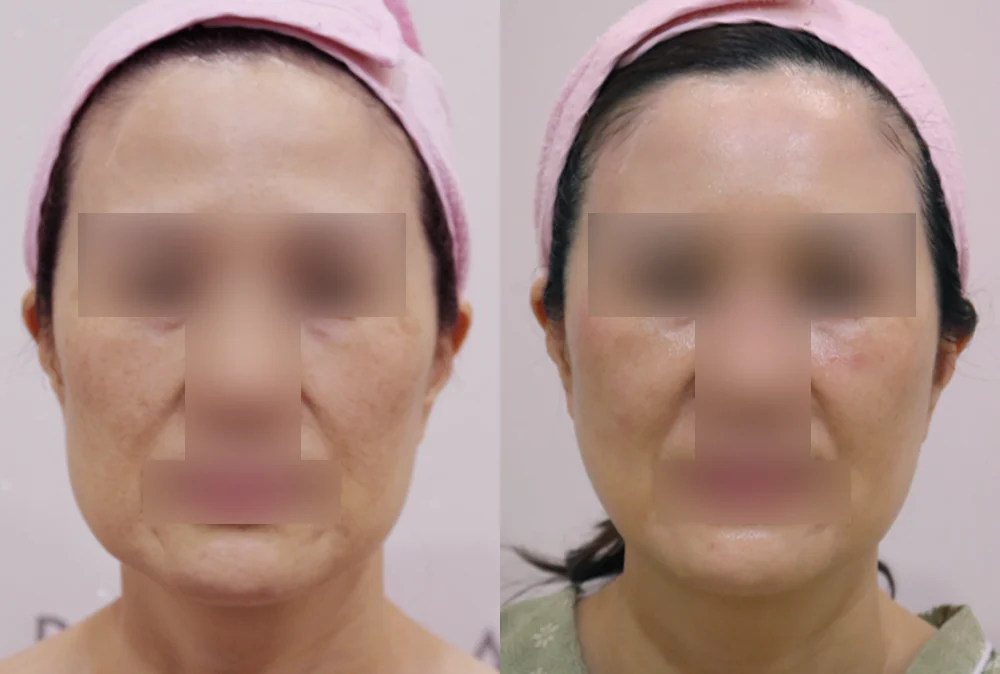
Lines around the nasolabial area and mouth, with laxity below the jawline (front view)
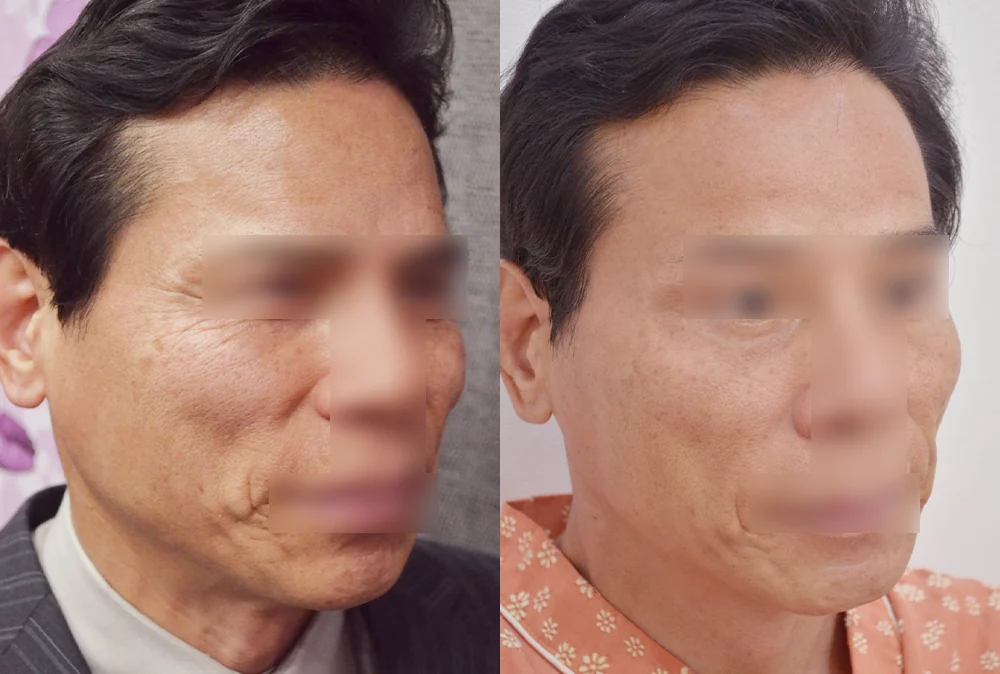
Many deep lines on the cheek and around the mouth (angled view)
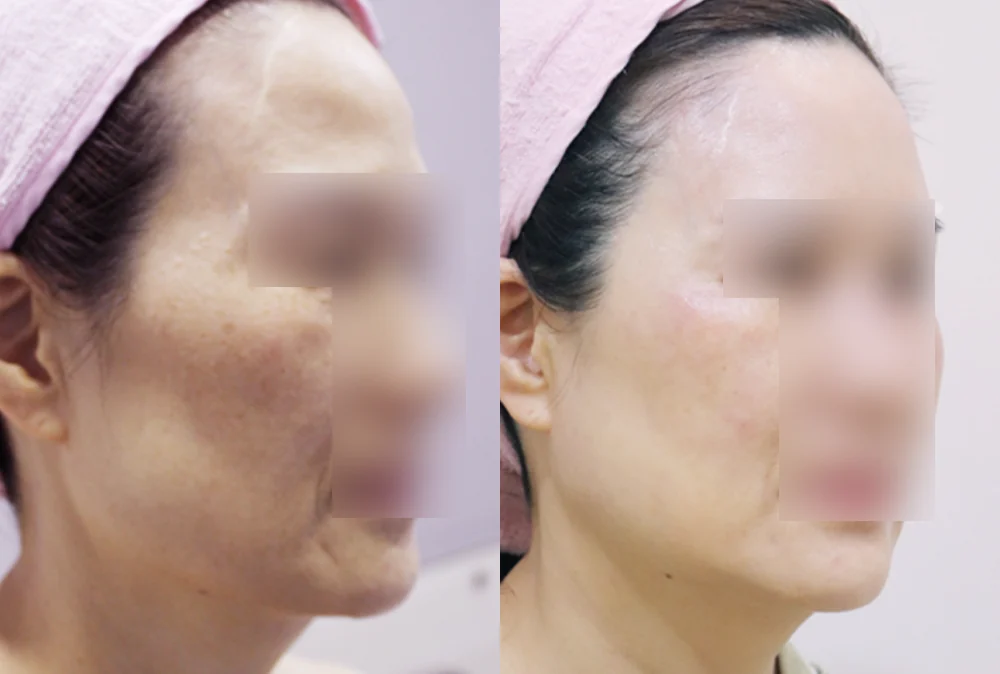
A blurred jawline and uneven skin texture on the cheek (angled view)
* Results vary from person to person. Side effects are possible, so please decide after a thorough consultation with a doctor.
Frequently asked questions
Do I need all four methods?
No. Multi-lifting chooses only the methods that match the cause. One person may have jawline liposuction alone, while another combines fat grafting with lasers. The sagging layer is checked first, and only what is needed is planned.
How is this different from a thread lift?
A typical thread lift uses threads with tiny barbs to hook sagging tissue and pull it upward. The dissolvable threads in multi-lifting are placed like a mesh under the skin to treat texture and fine lines, which is a different use. Analyses of thread procedures suggest their effect can fade over time,4 so threads alone are not used to hold up a sagging face long term.
How long do results last?
It depends on the methods and on how quickly you age. Satisfaction with thread procedures was lower in the long term than right after treatment,4 and only part of grafted fat survives.5 Aging continues after treatment, so it is realistic to expect to follow up and refine over time rather than treat once. At Bonita Clinic, we explain that a facelift, which also tightens the SMAS, tends to last longer than methods without large incisions.
How long is the recovery?
It depends on the combination. Methods without large incisions usually mean a shorter recovery than a facelift. But with liposuction or fat grafting, both the treated area and the area where fat was taken can swell and bruise. If you have an important date coming up, please tell us at consultation.
I have had threads or fillers before. Is that a problem?
Often not. But if your face has sagged again after earlier lifting, the remaining threads, fillers and tissue are checked first. If an unknown injected material has formed lumps, that problem should be looked at before any lifting.
What to prepare before your consultation
- The areas that bother you most: jawline, under the chin, nasolabial folds, cheeks, forehead, neck
- Earlier lifting, threads, fillers or fat grafting, and when you had them (product names if known)
- Any large weight changes in the past
- Medicines you take, especially blood thinners
Bonita Clinic is on the 3rd floor of 565 Gangnam-daero, Seocho-gu, Seoul, about 100 m on foot from Exit 8 of Nonhyeon Station (Line 7). You can read more on our Multi Lifting page. For laxity that reaches the SMAS, see Face Lift; for ultrasound lifting of deeper layers, see Ulthera and the guide to Ulthera lifting.
References (6)
Sources that support the explanations in this article. Study findings describe general trends and do not guarantee individual results.
- Swift A, Liew S, Weinkle S, et al. The Facial Aging Process From the "Inside Out". Aesthet Surg J. 2021;41(10):1107-1119.doi:10.1093/asj/sjaa339Review (full text): facial aging layer by layer, with deflation of deep fat and descent of superficial fat as the main driver of midface aging, weakening ligaments letting the jowls sag and blurring the jawline, and thinner skin with elastin falling sharply from around age 40–50 (some authors from a pharmaceutical company)
- Marten T, Elyassnia D. Neck Lift: Defining Anatomic Problems and Choosing Appropriate Treatment Strategies. Clin Plast Surg. 2018;45(4):455-484.doi:10.1016/j.cps.2018.06.002Review (abstract): in many patients, submental liposuction and skin tightening alone do not correct the anatomical problems of the neck and under the chin, which must be diagnosed layer by layer
- Diniz DA, Gonçalves KK, Silva CC, et al. Complications associated with submental liposuction: a scoping review. Med Oral Patol Oral Cir Bucal. 2022;27(3):e257-e264.doi:10.4317/medoral.25122Scoping review (abstract): complications of submental liposuction are rare but significant when they occur, including hollowing under the chin, swelling, thick or contracted scars, transient facial nerve paralysis and hematoma
- Niu Z, Zhang K, Yao W, et al. A Meta-Analysis and Systematic Review of the Incidences of Complications Following Facial Thread-Lifting. Aesthetic Plast Surg. 2021;45(5):2148-2158.doi:10.1007/s00266-021-02256-wMeta-analysis of 26 thread-lift studies (abstract): swelling 35%, skin dimpling 10%, altered sensation 6%, visible or palpable threads 4%, infection 2%, thread extrusion 2%; dissolvable threads had less altered sensation and extrusion; over-50s had more dimpling and infection; satisfaction fell from 98% right after to 88% long term, so effects may not last
- Shen S, Huo H, Ren H, Shao Y. Comparative Efficacy and Safety of Cell-Assisted and Conventional Lipotransfer in Facial Filling: A Systematic Review and Meta-Analysis. Aesthetic Plast Surg. 2024;48(7):1444-1456.doi:10.1007/s00266-023-03650-2Meta-analysis of 15 facial fat-grafting studies with 737 patients (abstract): cell-assisted lipotransfer showed higher fat survival and satisfaction than conventional grafting with no difference in complications, but most studies were small and observational, so the conclusion is tentative and long-term data are needed
- Alexiades-Armenakas MR, Dover JS, Arndt KA. The spectrum of laser skin resurfacing: nonablative, fractional, and ablative laser resurfacing. J Am Acad Dermatol. 2008;58(5):719-737.doi:10.1016/j.jaad.2008.01.003Review (abstract): lasers address skin texture, wrinkles and sun damage, and non-ablative, fractional and ablative approaches differ in effect, recovery and risk; the basis for the role of combined lasers
About this article
This article separates general medical information from Bonita Clinic's own approach. Because the right decision depends on each person's condition, it is not a substitute for a consultation.
