 KOKorean
 ENEnglish
 JP日本語
JP日本語 CN中文(简体)
 TW中文(繁體)

Nasal Tip Surgery in Seoul: Is a Bulbous Tip About Skin or Cartilage?
It can be either, and often it is both. Thick tip skin and soft tissue hide the shape of the cartilage even after it is refined. Large or splayed alar cartilages (the cartilages that shape the tip) make the tip look broad, and weak support leaves the tip low and undefined. Narrowing or carving the tip without separating these causes can leave it pinched or let it spread again. So skin thickness, cartilage shape and strength, and tip angle are assessed before the method is chosen. If you are planning treatment in Seoul, you can send photos of your tip from the front and from below to see which approach may suit you.
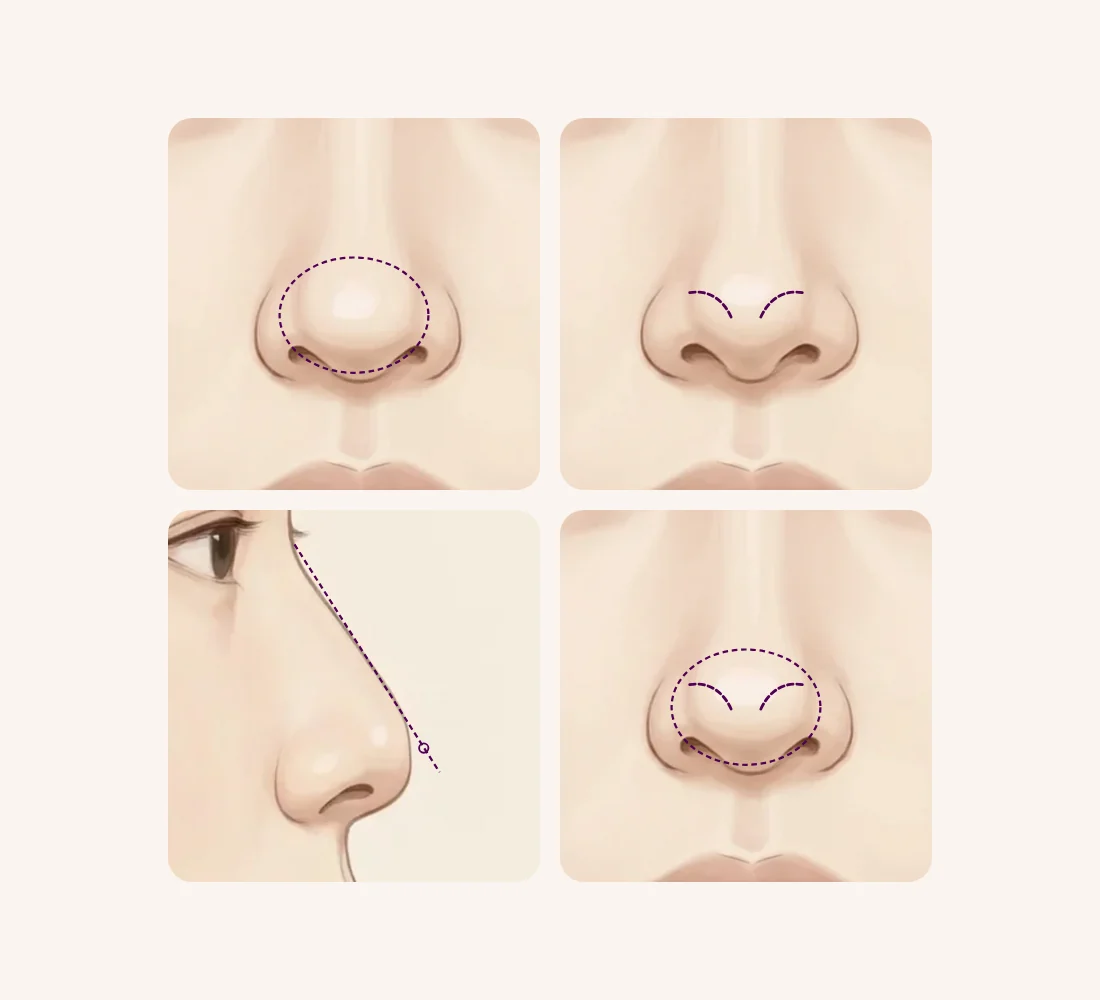
What shapes the tip of the nose?
Two people may both describe their tip as "bulbous", yet the cause can be quite different. The shape of the nasal tip comes from three things working together:
- The skin and soft tissue (the soft layers under the skin) covering it
- The alar (lower lateral) cartilages beneath, which form its outline
- The support structures that hold the tip forward and keep its height
Three things that shape the tip
The soft tissue between skin and cartilage is not a single layer. Beneath the skin lie a superficial fat layer, a fibromuscular layer (a thin layer mixing fibers and muscle) and a deep fat layer. Under these come the lining of the cartilage and the cartilage itself. A study of bulbous tips in East Asian patients explains that in thick tips the dermis and fat are thicker too. But the key difference is a much thicker fibromuscular layer.2
The layers that cover and support the tip
- 1Vessels under the dermis: skin not thinned aggressively
- 2Thick fibromuscular layer: hides cartilage contour
- 3Splayed alar cartilage: drawn together with sutures
- 4Support cartilage: adds height and strength
It is often said that East Asian noses have thick skin, but real thickness varies a great deal between individuals and between areas of the nose. One study measured nasal skin and soft tissue in 200 adults using CT scans (X-ray images that show cross-sections). Tip soft tissue was thinner in white patients (2.4 mm on average) than in the other groups. Yet overall nasal soft tissue was thinner in Asian Americans (3.22 mm) than in African American or Latin American patients.3 So feeling your own nose tells us more than any group average.
Which kind of tip do you have?
Tip concerns seen in consultation usually involve one or more of the following:
- Thick tip skin and soft tissue that make the tip look round and heavy
- Large or widely splayed alar cartilages that make the tip look broad from the front
- Low tip height and weak support that leave the tip looking undefined
- A tip that droops, or the opposite, one that is over-rotated so the nostrils show too much
Many people have several of these at once. Treating every tip the same way, without separating causes, can leave it looking pressed or uneven, or let it droop again over time. Here is how the approach usually differs by cause:
Approach by the cause of a bulbous tip
1If the tip skin and soft tissue are thick
Soft tissue is thinned in stages; the skin itself is not thinned aggressively
Soft tissue
2If the alar cartilages are large or splayed
They are sutured together and refined, not cut away too much
Cartilage sutures
3If the tip is low and weak
Your own cartilage adds support and height
Support graft
4If several causes overlap
Tissue thinning, cartilage work and grafts are planned cause by cause
Combination
Each case has something to keep in mind:
- Thick skin: removing the dermis itself too aggressively can cause circulation problems.
- Alar cartilage: cutting too much can pinch the tip or let it drop.
- A low tip: the height may settle slightly lower than right after surgery.
- Several causes: each cause is given its own weight in the plan.
If a drooping tip is your main concern, the arrow nose guide covers the angle and the causes of droop in more detail.
How is the alar cartilage handled?
Splayed or large alar cartilages are mainly reshaped with sutures (stitches that hold a shape). Several kinds are used:2
- Sutures that narrow each dome (where the cartilage bends at the tip)
- Sutures that bring the two domes closer
- Sutures that reduce the curve of the lateral crura (the outer wings of the alar cartilage)
- Sutures that fix the tip to the septum (the wall dividing the inside of the nose) so it does not drop
Part of the upper edge of the cartilage may be trimmed to reduce volume, but enough of the lateral crus must be left. One recommendation is to leave a strip of around 6 mm, and the study's authors report leaving at least 4.5 mm.2
Is removing more always better?
Removing more cartilage might seem to promise a smaller tip, but excessive removal leaves its own problems. Known consequences of over-resection include:4
- Alar rims (nostril edges) that pull upward
- A pinched tip
- Small knuckles where cartilage edges show through the skin (bossae)
- Deep grooves above the nostrils
- Collapse of the nostril entrance when breathing in
The authors stress that avoiding these in the first place is the main safeguard.4 When these changes have already happened, our nasal tip revision guide explains the options.
On the other hand, building up support alone can tilt the tip upward in an artificial way. How much the cartilages are brought together, how they are supported and how far the tip is rotated have to be balanced as one decision.
How is a low tip raised?
If the tip is low and undefined, bringing cartilage together is not enough; the tip needs support holding it forward. Two common methods use your own cartilage:
- A strut placed inside the columella (the strip between the nostrils)
- A septal extension graft attached to the end of the septum
The height achieved right after surgery does not stay exactly the same. In a 3D imaging study of 106 patients, tip projection and rotation decreased gradually from their position right after surgery. The change in projection was similar with the two methods, while rotation was better maintained with the septal extension graft.5 The planned height therefore takes later settling into account.
Which cartilage is used?
| Cartilage | Features | Good to know |
|---|---|---|
| Septal cartilage | Straight, thin plate | Taking it reduces the original support |
| Ear cartilage | Curved and soft | Stable when changes are mild and skin is loose |
| Rib cartilage | Plentiful and firm | Mainly for severe deformity or revision; harvest burden |
A review of cartilage choices in East Asian patients makes three points. Preserving the septal cartilage instead of harvesting it helps long-term tip support. Ear cartilage is effective and stable when the skin is loose and the deformity mild. Rib cartilage suits severe deformities and revision surgery.6 Which cartilage fits depends on how much is needed and the condition of your nose.
How much can thick skin change?
Thick skin has a good side and a hard side. It hides small irregularities and graft edges, but it also hides refined cartilage work. After surgery the skin settles back over the new framework and gradually shrinks onto it, and thick skin fits less closely than thin skin.2
A systematic review (a study that gathers all relevant research by a set method) of 28 studies on thick-skinned rhinoplasty noted that most of the evidence was low level. It emphasized an individual plan covering the periods before, during and after surgery, and realistic goals.1
Thinning the dense soft tissue under the skin can help. But aggressively removing the dermis itself risks damaging the vessel network that feeds the tip skin, causing circulation problems.2 So thick tips are usually approached by thinning tissue in stages while changing cartilage shape and support. This creates room for a contour to show, rather than removing a great deal at once. Thicker skin also tends to swell more after surgery, and for longer.2
How does recovery go?
At Bonita Clinic, we perform nasal tip surgery under sedation together with local anesthesia. You go home the same day, and there are stitches. Swelling and bruising follow surgery, so a nasal splint (a support that holds the shape) is kept on and cold compresses are used. The splint is taken off and the stitches removed as you heal. While the main swelling goes down, avoid anything that presses on the nose, such as glasses. The last thing to settle is leftover swelling in the tip, and the final shape appears as it fades. The length of recovery and the number of check-ups vary with the extent of surgery and with each person.
Side effects to know about
- As with any surgery, swelling, bleeding, inflammation, infection and nerve injury can occur.
- With tip surgery, asymmetry, a tip that looks pressed or pinched, and spreading or dropping again over time are possible.4
- If cartilage is taken from the ear or septum, that site is checked as it heals.
How we approach it at Bonita Clinic
Treatment options you can discuss in Seoul
Bonita Clinic opened in 1995 and has stayed in one place since; Dr. Kwang-Seop Chung, a board-certified plastic surgeon trained in Brazil, operates himself. For tip concerns, a consultation can cover:
- Assessment of tip skin and fat thickness, alar cartilage shape and spread, tip height and angle
- Staged thinning of thick soft tissue
- Bringing splayed alar cartilages together and supporting them
- Support and angle design with your own ear or septal cartilage for a low or drooping tip
- Planning the tip together with the nostrils or bridge, for example with alar reduction, when the proportions call for it
Why do the plan and cost vary?
"A slimmer tip" can mean simple suturing of the cartilage, or a combination of soft tissue thinning, support grafts and work on the nostrils or bridge. The cause, and how many of these steps are needed, is what shapes the plan and the cost.
- Whether skin, cartilage or support is the main cause
- How much soft tissue needs thinning
- Whether cartilage grafts are needed, and from where
- Whether the bridge or nostrils are also changed
- Previous surgery, filler or threads in the tip
- Anesthesia: sedation with local
Quote given after examining you in person
A final estimate is given once an in-person examination has shown how thick your skin is, what the cartilage is like and whether a graft is needed. Before that, any figure would be guesswork.
What can photos show, and what needs an in-person exam?
Photos show the outline of your tip well. They cannot show the thickness of the skin or the strength of the cartilage underneath, which are often what decides the approach.
Photos can show
- Tip width and roundness from the front
- Nostril and columella shape from below
- Tip position at rest and when smiling
- Visible pores and skin texture
Needs an in-person exam
- Skin thickness and firmness (pinch test)
- Size, spacing and strength of the cartilage
- How well the tip resists pressure
- Septal cartilage available for grafts
- Filler or scar tissue from past treatments
Helpful photos: front, from below looking up at the nostrils, both profiles, both 45-degree views and a smiling profile, in even light without makeup. Let us know which change matters most to you: less width, more height or a different angle. Mention any previous nose surgery or tip filler. You can send us a message with your photos and questions before you plan your visit.
Planning your visit and recovery
What is fixed in advance is the treatment information above. Surgery is under sedation with local anesthesia, with same-day discharge and stitches. A nasal splint is used at first and comes off with the stitches during recovery. When that happens, how long to stay in Seoul and when to check back are agreed with you at consultation according to the planned surgery, and may vary.
Tip swelling lasts the longest, and thicker skin tends to stay swollen longer,2 so photos from the first weeks will not show the final result. Plan for visible swelling and bruising at first, and for keeping glasses off your nose while the main swelling settles. If ear cartilage is used, the ear also needs a little care while it heals.
After you return home, contact a doctor promptly if redness, pain, warmth, discharge or bleeding increases, or if the tip skin changes color. Dated photos help any doctor who sees you later, and help us if you send an update.
Real treatment cases
These cases appear on Bonita Clinic's nasal tip rhinoplasty page. Results vary from person to person.
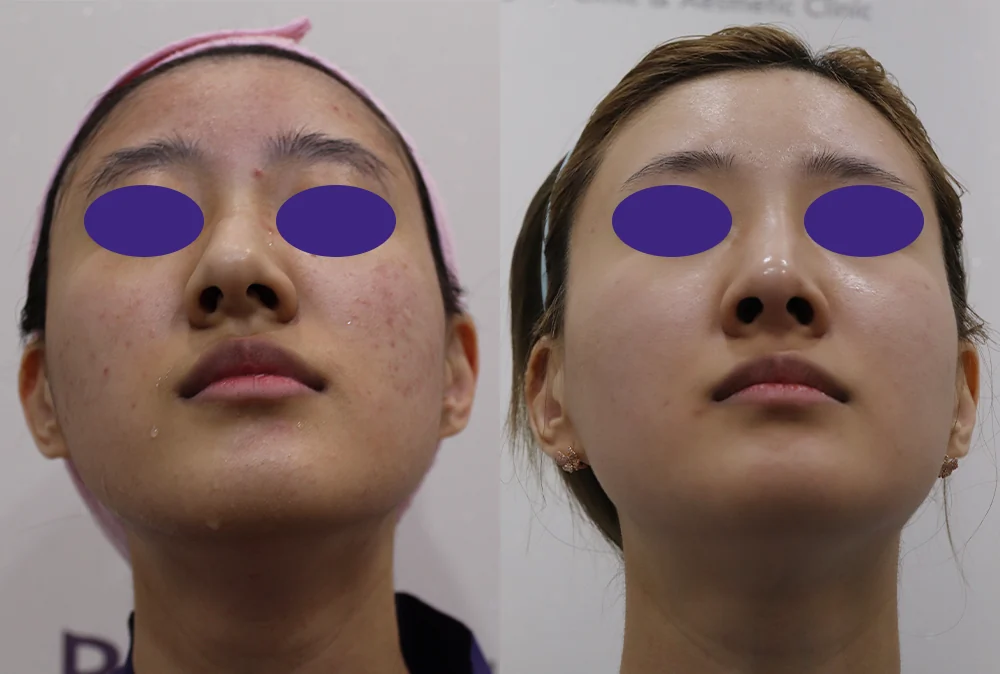
A tip that looked broad and round from below
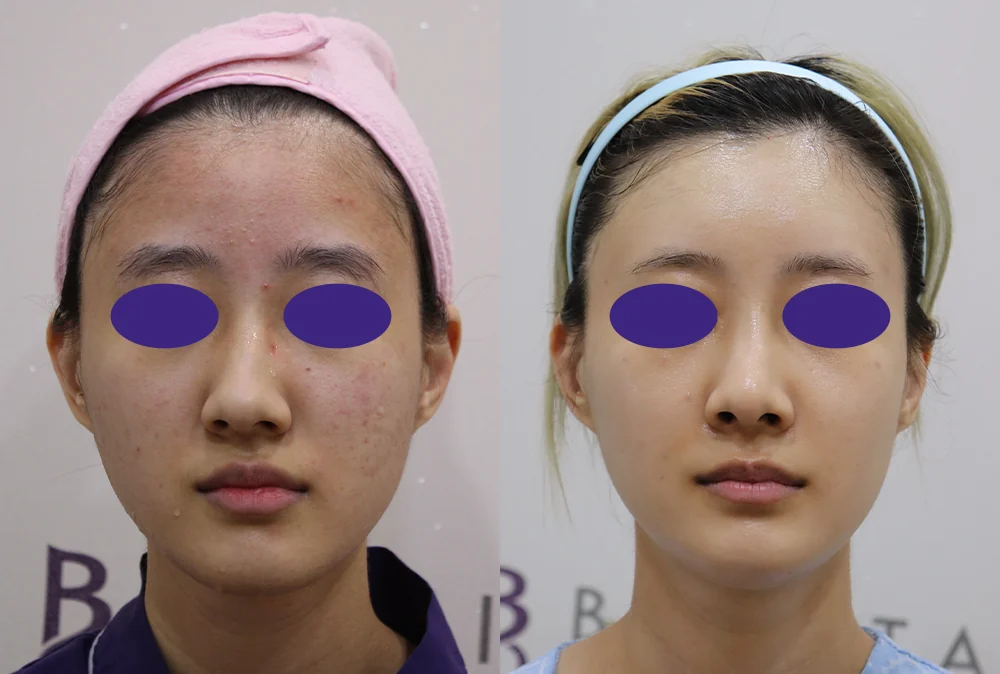
A tip that looked heavy and wide from the front
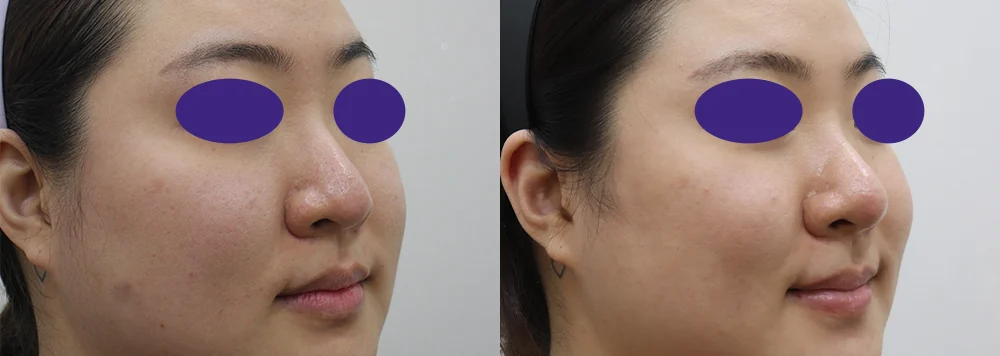
A tip that looked round in a three-quarter view
* Results vary from person to person. Side effects are possible, so please decide after a thorough consultation with a doctor.
Frequently asked questions
Will tip surgery work if my skin is thick?
It depends on the person. If the bulbous look comes from splayed cartilage or weak support, correcting the cartilage can make a visible difference. If the skin and soft tissue are very thick and firm, cartilage changes show less.2 At consultation the skin is pinched to judge its thickness and elasticity, and the range of change you can expect is discussed openly.1
Where does the cartilage come from?
Bonita Clinic mainly uses your own cartilage, such as septal or ear cartilage, to build the structure that supports the tip. Septal cartilage is straight and useful as a strut, but taking it reduces the original support. Ear cartilage has been described as stable when the changes needed are mild.6 The choice depends on how much is needed and the state of your nose.
Is the tip enough, or do the nostrils or bridge need work too?
A tip can look wide because the nostrils are wide, or look heavy because a low bridge makes it stand out. So the scope is decided after looking at bridge height, nostril width, nasolabial angle and skin thickness together. If nostril width is the main issue, see the guide to alar reduction and nasal bone narrowing.
Can the tip spread or drop again after surgery?
Tip height and angle tend to decrease gradually from their position right after surgery.5 If too much cartilage is removed and support weakens, the tip can spread or drop again, so the amount of narrowing and the support are planned together.4 If a tip you had operated on has changed, see the nasal tip revision guide.
Will the scars be noticeable?
At Bonita Clinic, scars from nose surgery are mostly inside the nostrils and on the columella, and we care for them so they fade over time. When the tip cartilage has to be seen directly for sutures or grafts, a small incision across the columella is often added.
What to prepare before your consultation
- Front, from-below, profile, 45-degree and smiling photos
- The change you want most: less width, more height or a different angle
- Any previous nose surgery, or filler or threads in the tip
- Any septal or ear surgery (relevant to where cartilage can be taken)
- Any nasal blockage or rhinitis
Bonita Clinic: 3rd floor, 565 Gangnam-daero, Seocho-gu, Seoul, roughly 100 m on foot from Exit 8 of Nonhyeon Station (Line 7). Details are on our Nasal Tip Rhinoplasty page. For a drooping tip, see the arrow nose guide; if a previously operated tip has changed, see Nasal Tip Revision.
References (6)
Sources that support the explanations in this article. Study findings describe general trends and do not guarantee individual results.
- Vahidi N, Wang L, Peng GL, et al. Rhinoplasty for Thick-Skinned Noses: A Systematic Review. Aesthetic Plast Surg. 2023;47(5):2011-2022.doi:10.1007/s00266-023-03460-6Systematic review (abstract) of 28 studies on thick-skinned rhinoplasty: mostly level 4–5 evidence; management divided into before, during and after surgery; individualized plans and realistic goals
- Cui D, Zheng Z, Sharjeel A, Guo J. The Role of Skin and Soft-Tissue Excision in the Management of the Bulbous Nasal Tip in Asian Rhinoplasty. Aesthet Surg J Open Forum. 2025;7:ojaf043.doi:10.1093/asjof/ojaf043Case series (full text) of 22 East Asian patients with bulbous tips: thick soft tissue hides cartilage contour and conforms less to the framework; soft tissue layers and a much thicker fibromuscular layer; forcibly removing dermis risks blood supply; suture techniques; lateral crus width to preserve (about 6 mm recommended, at least 4.5 mm in the authors' experience); thicker skin swells more and longer
- Eggerstedt M, Rhee J, Buranosky M, et al. Nasal Skin and Soft Tissue Thickness Variation Among Differing Races and Ethnicities: An Objective Radiographic Analysis. Facial Plast Surg Aesthet Med. 2020;22(3):188-194.doi:10.1089/fpsam.2019.0008CT study (abstract) of 200 adults: nasal skin and soft tissue thickness varies by site and group; tip thinner in white patients (2.4 mm); overall thickness thinner in Asian Americans (3.22 mm) than in African American and Latin American patients
- Moritz E, Asaria J. When Reductive Rhinoplasty Goes Wrong and How to Make it Right. Facial Plast Surg. 2025;41(6):716-719.doi:10.1055/a-2577-2805Review (abstract): consequences of over-resection, including alar retraction, pinched tip, bossae, deep alar grooves and external valve collapse; avoidance is the main safeguard
- Sawh-Martinez R, Perkins K, Madari S, Steinbacher DM. Control of Nasal Tip Position: Quantitative Assessment of Columellar Strut versus Caudal Septal Extension Graft. Plast Reconstr Surg. 2019;144(5):772e-780e.doi:10.1097/PRS.00000000000061783D cohort (abstract) of 106 patients: tip projection and rotation decrease from the immediate postoperative position; projection change similar with columellar strut and septal extension graft; rotation better maintained with septal extension graft
- Zhang Z, Yu Z, Song B. Septal extension graft for correcting short nose in East Asians: review of autologous cartilage grafts and postoperative stability. Br J Oral Maxillofac Surg. 2022;60(9):1159-1165.doi:10.1016/j.bjoms.2022.06.004Review (abstract) of autologous cartilage in East Asians: preserving septal cartilage helps long-term tip support; ear cartilage effective and stable for loose skin and mild deformity; rib cartilage suits severe deformity and revision
About this article
This article separates general medical information from Bonita Clinic's own approach. Because the right decision depends on each person's condition, it is not a substitute for a consultation.
